Most distributors don’t lose money on cylinder kits because the price is too high. They lose money because a kit that “looks right” doesn’t fit the engine code, or a sleeve that measures correctly on the outside fails at the liner within 3,000 km. Every wrong SKU that ships to a repair shop comes back as a warranty claim, a return freight cost, and a customer who questions your catalog for the next order.
This guide is written for distributors and wholesale buyers who need to evaluate cylinder kits the way a procurement manager evaluates any critical engine component: by fitment precision, liner integrity, and supplier documentation—not by unit price alone.
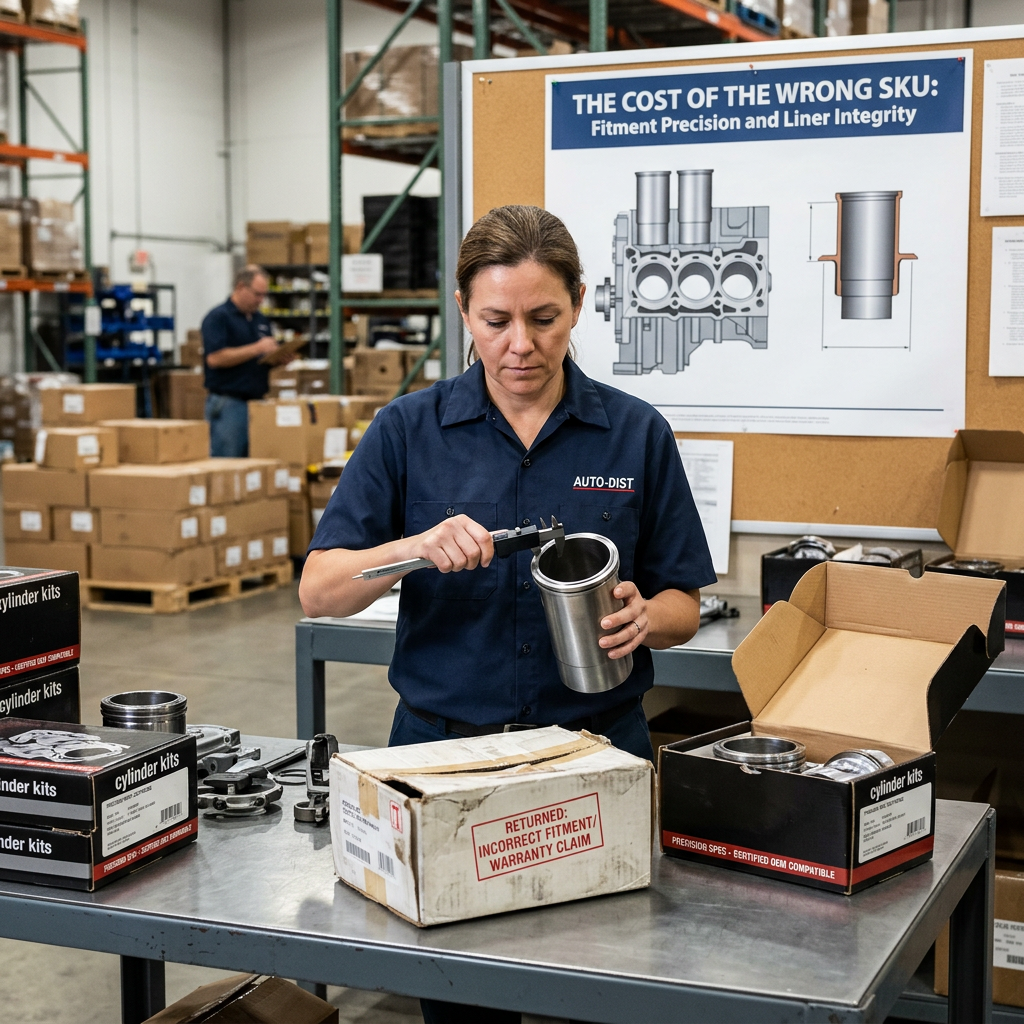
A generic 52.4mm cylinder that measures “close enough” on a caliper can still fail on taper and cylindricity. When the bore is out of round, the rings never seat properly. The repair shop installs it, the customer rides for two weeks, and then the oil consumption starts. The unit comes back—not to the factory, but to you.
For distributors carrying AT110, FT250, or CB250D fitments, the practical rule is: demand a bore measurement report or at minimum a supplier who can state their cylindricity tolerance in writing. If they cannot tell you the Ra value of the liner surface, you are buying a commodity with unpredictable return rates.
Take the AT110 ROJO / RT110 fitment as an example. The specifications that matter for a distributor’s catalog are not just “52.4mm bore.” They are:
- Sleeve outer diameter: 56.1mm — critical for crankcase fitment across Rojo and RT110 variants
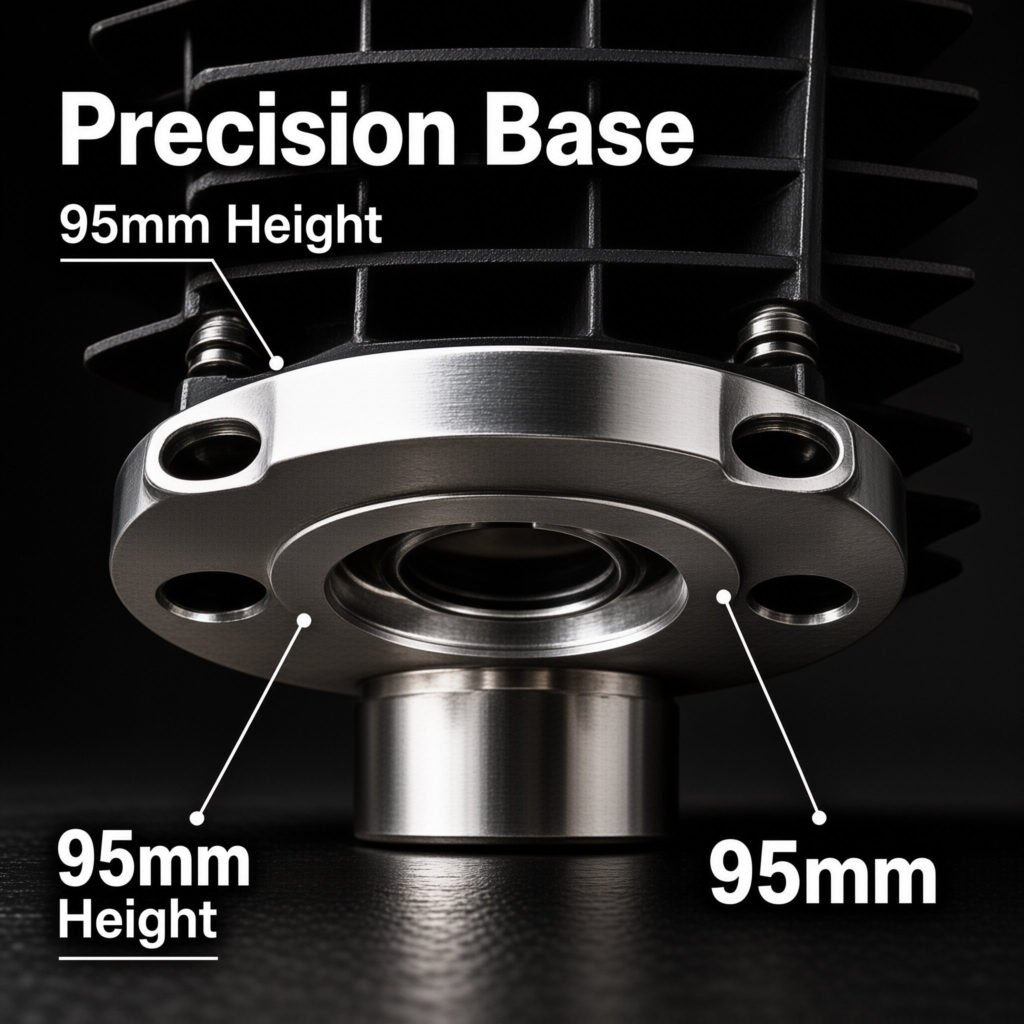
- Deck height: 69mm, Total height: 95mm — mismatched heights cause compression ratio drift and gasket failures
- Piston ring grooves: 1-1-2mm with a 13×41.5mm pin — this is not a universal 110cc pattern
A kit listed without these numbers forces your sales team to guess. A kit listed with them lets a repair shop verify fitment before ordering, which means fewer returns.
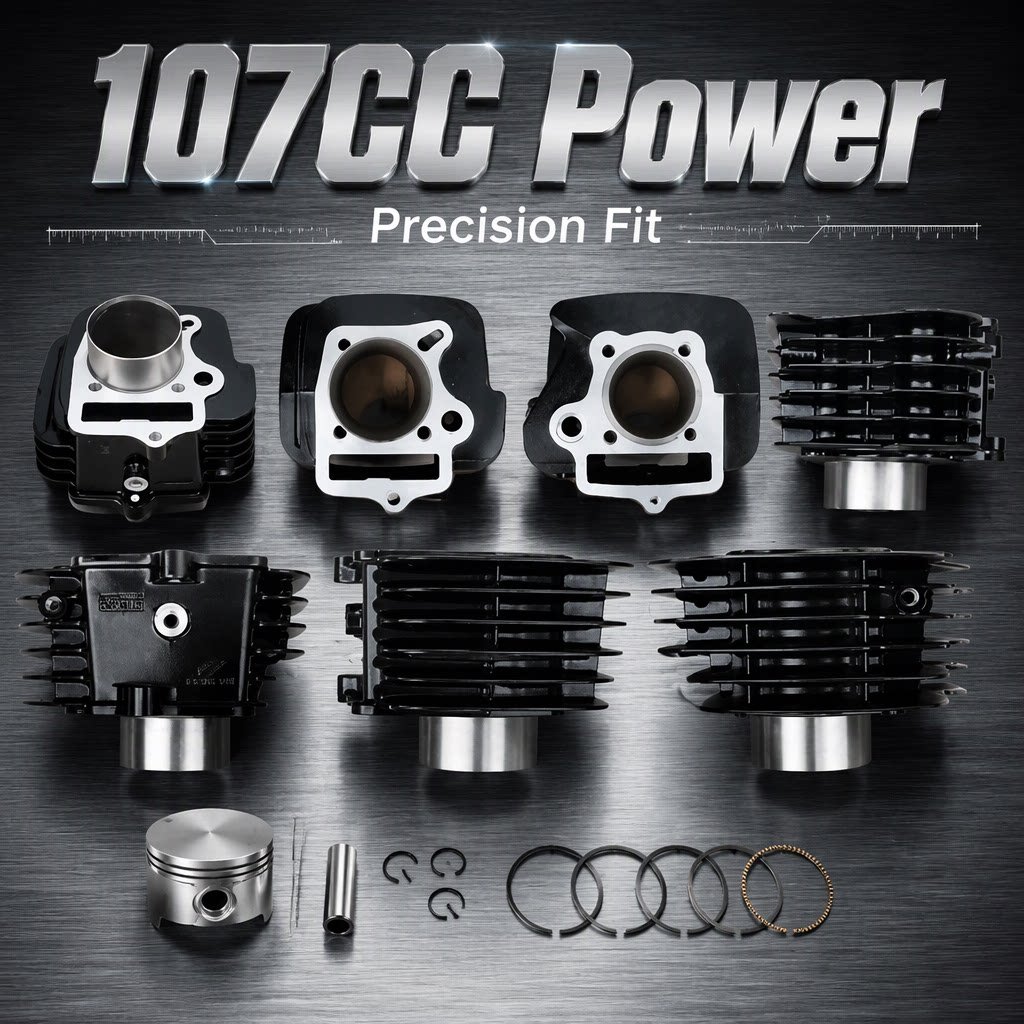
One of the most common catalog errors in aftermarket cylinder kits is listing piston ring height as the same value as piston total height. Piston total height (e.g., 42.5mm for the FT250 piston) is the distance from crown to skirt bottom. Ring axial widths are the individual groove heights—0.8mm, 0.8mm, and 2.8mm in this application. When a distributor’s catalog conflates the two, buyers lose confidence in every other spec on the page.
At BSOCOOL, we verify ring groove widths independently before a kit goes into the catalog. If a supplier cannot separate these two measurements, they have not handled the part.
Inventory and Product-Selection Advice for Distributors
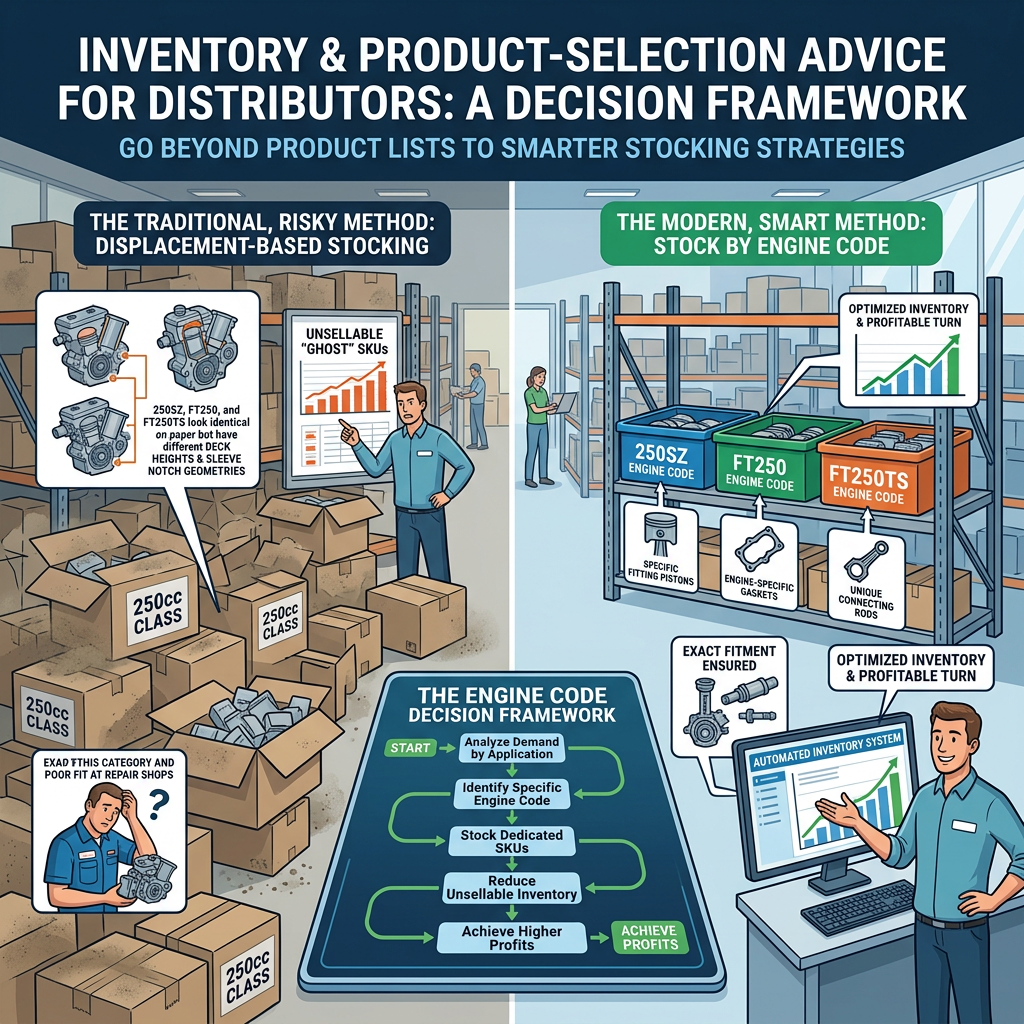
So here’s the thing—when you’re stocking cylinder kits, a product list isn’t going to help you. What you actually need is a way to decide what to put on the shelf. Let me walk you through four rules we’ve seen work.
First rule: stock by engine code, not by displacement. It’s tempting to think “250cc is 250cc,” but it isn’t. The 250SZ, the FT250, and the FT250TS all sit in the same 250cc class, and yet their deck heights and sleeve notch geometries can be different. If you stock by displacement, you end up with SKUs that look perfectly sellable on paper—right up until the repair shop tries to install one and it doesn’t fit. Then that inventory just sits in your warehouse. So build your catalog around engine codes, and check deck height, sleeve outer diameter, and gasket spec for every variant before you commit to stock.
Second rule: treat head and base gaskets as bundled SKUs, not separate line items. The CB250D three-layer steel head gasket and the CB150D base gasket should always move together with their matching cylinders. Why? Because a missing or mismatched gasket is one of the most common reasons a kit comes back—even when the cylinder itself is perfectly within spec. The kit was fine. The gasket wasn’t. And now it’s your problem.
Third rule: validate any new fitment with a small trial order—say 10 to 20 sets—before you stock deep. Wholesale MOQs vary a lot, anywhere from 10 units up to 500 depending on the supplier and the fitment. But for anything new you’re adding to the catalog, start small. Run a trial batch, get real fitment feedback from the local repair shops actually installing them, and only then decide how much to replenish. That protects your working capital, and it gives you installation data you can turn around and use in your own catalog.
And finally, fourth rule: ask your supplier for an installation torque table and piston ring end-gap specifications. This one matters more than people think. A lot of “installed it and now it’s burning oil” complaints don’t trace back to a defective kit at all—they trace back to an incorrect ring end gap or the wrong cylinder bolt torque during installation. If your supplier ships that technical documentation with the goods, your repair-shop customers have what they need to get it right the first time. And distributors who pass that documentation downstream? They see measurably lower return rates. It’s that simple.
BSOCOOL supplies motorcycle cylinder kits for distributors who need spec-verified fitments, not just low unit prices. For each kit we list—AT110 ROJO/RT110, FT250/250SZ/FT250TS, and other fitments—we provide bore, sleeve OD, deck height, total height, ring groove widths, and gasket specifications as separate, verifiable data points.
If you are evaluating a cylinder kit line for your catalog and want to compare specifications before placing a trial order, send us the engine codes you stock most. We will cross-check fitment and send a spec sheet you can use in your own catalog—whether you order from us or not.

FAQ: Wholesale Motorcycle Cylinder Kits
What is the minimum order quantity (MOQ) for motorcycle cylinder kits?
MOQ depends on the fitment and whether the kit is a stock item or a newly added SKU. For established fitments such as AT110 ROJO/RT110 and FT250/250SZ/FT250TS, trial orders typically start at 10–20 sets so distributors can validate fitment in their local repair market before committing to deeper stock. Larger mixed-model orders can be quoted at lower per-unit cost. Contact us with the engine codes you stock most and we will confirm MOQ per SKU.
Can you supply cylinder kits under our own brand or packaging?
Yes. We support OEM and private-label packaging for qualified wholesale orders. This includes custom box printing, branded labels, and inserted installation documentation. Branding requirements, artwork approval, and minimum quantities per SKU are confirmed at quotation stage.
What is the lead time for a wholesale cylinder kit order?
Lead time depends on order volume and whether items are in stock. Stock fitments typically ship within a short window after payment confirmation; custom packaging or large-volume orders require additional production time. We provide a confirmed delivery schedule with every quotation rather than a generic estimate.
Do your cylinder kits include gaskets, or are they sold separately?
It depends on the kit. The FT250/250SZ/FT250TS kit includes a CB250D 1mm three-layer steel head gasket (φ66mm inner diameter) and a CB150D base gasket. The AT110 ROJO/RT110 kit is supplied as cylinder, piston, and piston ring set. We recommend managing gaskets as bundled SKUs rather than separate line items, because kits sold without matching gaskets generate more installation disputes and after-sales claims.
How do I verify that a cylinder kit fits my market’s engine variants?
Match by engine code, not by displacement alone. For example, 250SZ, FT250, and FT250TS are all 250cc-class engines, but deck height, sleeve notch geometry, and gasket specifications can differ between variants. Send us the engine codes you stock and we will cross-check bore, sleeve outer diameter, deck height, total height, ring groove widths, and piston pin size before you place a trial order.
What specifications should a distributor require before listing a cylinder kit?
At minimum: bore diameter, sleeve outer diameter, deck height, total height , piston outer diameter and total height, individual ring groove widths (not combined with piston height), piston pin dimensions, clip type, and gasket thickness and material. A supplier who cannot separate ring axial widths from piston total height has not handled the part in enough detail to guarantee fitment.
What causes most warranty claims on aftermarket cylinder kits?
The most common causes are bore out of round or excessive taper, incorrect ring end gap at installation, mismatched deck height causing compression drift, and gasket failure from incorrect torque or wrong gasket specification. Most of these are preventable at the sourcing stage—by requiring cylindricity and surface roughness data from the supplier, and by shipping installation torque and ring end-gap specifications with every kit.
Do you provide installation specifications with wholesale orders?
Yes. We can supply installation reference data including cylinder bolt torque values and piston ring end-gap specifications for the fitments we carry. Distributors who pass this documentation to their repair-shop customers see fewer “installed but burning oil” complaints, which are usually installation-related rather than a defect in the kit itself.
Can you supply mixed orders combining different cylinder kit models?
Yes. Mixed-model orders are standard for distributors serving multiple engine families. Combine AT110, FT250/250SZ/FT250TS, and other fitments in one shipment to consolidate freight. Per-SKU minimums still apply, and mixed-order pricing is confirmed at quotation.
How do you handle quality issues or defective units in a wholesale order?
Report defects with the engine code, installation details, and photos or measurements of the failed part. We review each claim against the supplied specification and respond with replacement, credit, or technical guidance depending on the cause. Because we verify ring groove widths, sleeve dimensions, and gasket specs before listing a kit, claims are usually traceable to a specific measurement rather than handled as a blanket return.
Do you publish retail pricing on your site?
No. BSOCOOL quotes wholesale pricing directly to distributors and trade buyers. This protects your margin and avoids channel conflict when you resell in your own market.
How do I request a quotation or spec sheet?
Send the engine codes you stock, estimated quantities per SKU, and any packaging or branding requirements to BSOCOOL. We will return a quotation with confirmed specifications and a lead-time schedule. If you are still comparing suppliers, we can send the spec sheet for your own catalog use regardless of whether you place an order.